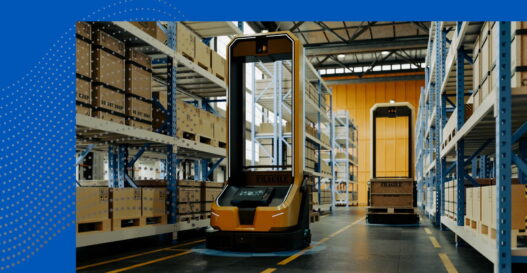
How Companies Benefit from Automated Transport Processes
In this article, we demonstrate the practical benefits of AGVs, identify areas where sustainable improvements can be achieved and why the keys to success are thorough planning and employee participation.
AGV systems grow with your requirements
Modern AGV systems are much more adaptable than previous models. Technologies like SLAM (Simultaneous Localization and Mapping) eliminate the need for rigid routes.
What does this mean to you?
If your production or warehouse layout changes or new stations are added, AGV can be flexibly adapted without any structural adaptations or expensive infrastructure modifications.
This is an immense advantage, especially for companies with fluctuating capacity utilization or increasing product diversity. Particularly in dynamic markets, where article diversity is high and processes change often, we frequently observe flexibility and scalability providing the extra edge.
More transparency in logistics processes
AGV systems provide more than transportation. They also provide valuable information regarding the true processes in operation. Every trip, every transport order and any idle time is recorded and can be evaluated.
This creates a level of transparency that only exists to a limited extent in many companies. Where do bottlenecks arise? Which areas cause unnecessary idle times? Which transport routes are used particularly frequently? Such questions can be answered much more easily with the use of AGVs.
It has been shown time and again that the data obtained helps to optimize transport processes. Often, it also reveals opportunities for improvements in production, warehousing and material flow. Thus, AGV systems become an important aid in continuously developing processes and making well-founded decisions.
Energy efficiency and sustainability
Planned properly, AGVs can relieve the burden on workers, and significantly reduce energy consumption. Modern vehicles operate according to demand, utilize optimized charging cycles and actively save energy during breaking.
There are other effects: Fewer empty runs, more efficient routes and less material wear have a noticeably positive effect on the ecological footprint, all without the need for any major investments in buildings or new machines. So, if you want to make your intralogistics more sustainable, AGVs are an effective option.
This is how the implementation succeeds
AGVs are changing processes, employee roles, responsibilities and routines. That is why involving the employees in the introduction is particularly important. Our experience shows that once the team understands how the system works and how specifically it lightens their workload, acceptance increases significantly. Clear communications right from the planning stage, opportunities to participate and practical training in the introduction process are crucial in such an endeavor.
After all, such projects affect people and their daily work. Those who plan together early create smooth processes and nurture real acceptance.
Conclusion: AGV systems done right are worthwhile.
They are a good way to make in-house logistics processes future-proof, efficient and sustainable. They can make a big difference if they are individually planned and implemented jointly.
Our experience allows us to support companies in the integration of automated guided vehicles into their intralogistics in a meaningful way. We are happy to be there for you.